Roof Repair in Franklin County: what we actually do
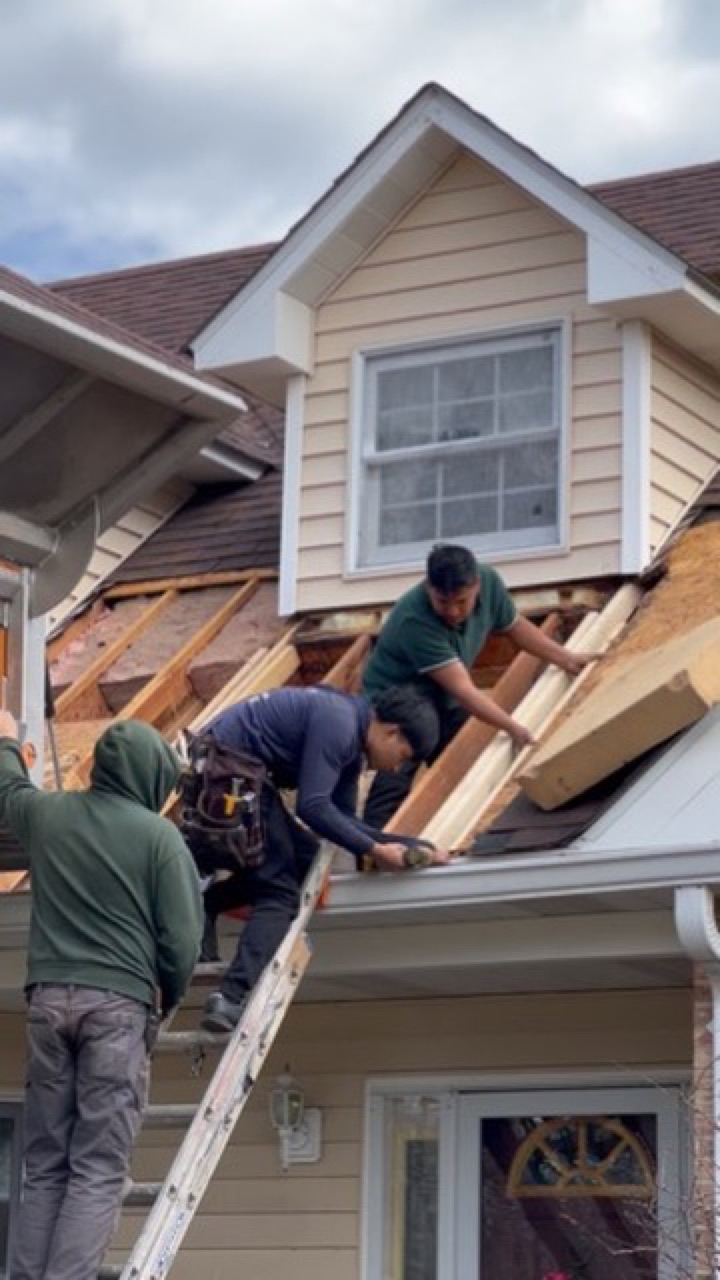
1990 is the year Matt Emmendorfer started fixing Missouri roofs, and 2,400-plus homes later his sons Tom and Tim still run every repair the same way. A roof repair around Union does not start with a price over the phone. It starts with someone climbing the roof to find why it is leaking, whether that is a blown shingle off a Washington ridge, a cracked pipe boot, or flashing that pulled away from a chimney in a St. Clair freeze-thaw. The family walks it first, then tells you what it actually needs.
Spring and summer hail, straight-line wind, and freeze-thaw cycles are what tear up a Franklin County roof, and each one breaks a roof differently. Wind across Pacific and Villa Ridge lifts and snaps shingles along the ridges and rakes. Hail bruises the mat and knocks granules loose so the shingle fails months later. Freeze-thaw works water under flashing and into nail holes through a Missouri winter. Emmendorfer repairs match the failure to the cause, so the fix holds instead of buying you one dry season before the leak comes back.
CertainTeed, Owens Corning, Malarkey, and GAF are the four shingle systems Emmendorfer is factory-certified to install, and that matters most on a repair. A repair only lasts if the new shingles match the existing roof in brand, profile, and color, and if they tie into the field the way the manufacturer intended. The family carries the right shingle for what is already on your Union or Sullivan home, names it on the written estimate, and lays it in so the repair sheds water and blends in instead of leaving an off-color square the next storm finds first.
How do you find a roof leak before you quote it?
Someone from the family climbs the roof and works it from the inside out. A water stain on a Washington ceiling is rarely under the actual leak, because water runs along decking and rafters before it drops. We trace it back to the failed shingle, the cracked pipe boot, the valley, or the flashing that let it in. Then you get a written estimate that names the real problem, not a guess from the driveway.
Fixing blown and missing shingles after Franklin County wind
Straight-line and storm wind pulls shingles off ridges, hips, and rake edges across Union and Pacific, and exposed decking starts leaking with the next rain. We replace the blown shingles with matching CertainTeed, Owens Corning, Malarkey, or GAF stock, reseal the surrounding course by hand where the storm broke the factory bond, and check the nailing so the repaired section holds through the next wind event instead of peeling again.
Flashing failures around chimneys, walls, and pipes
Most leaks are not the shingles, they are the flashing. Step flashing along a wall, the saddle behind a chimney, valley metal, and pipe boots are where Franklin County water gets in after years of freeze-thaw. We pull the failed flashing instead of caulking over it, set new metal and boots, and weave the shingles back over it the right way so the joint sheds water for years, not until the next thaw.
Matching the repair to your existing roof
A repair that does not match is a repair that fails. We identify the brand and profile already on your roof, CertainTeed, Owens Corning, Malarkey, or GAF, and carry matching shingles in the closest color the line still makes. On a sun-faded Sullivan or New Haven roof we explain honestly how close the color will come, lay the new shingles into the field correctly, and never leave a raised, off-color patch that the next hailstorm targets.
When we tell you to replace instead of repair
Tom or Tim will tell you straight when a repair is throwing money at a roof that is done. If the shingles are brittle and shedding granules across the whole field, the decking is soft, or the roof is near the end of its life, a repair only moves the leak a few feet. We show you what we found on the roof, explain why a replacement is the honest call, and never sell you a patch that we know will not hold.
How the roof repair process works
Step 1
Walk the roof
We climb the roof and find the actual source of the leak or damage, then check the surrounding shingles, flashing, and decking. Around Union and Washington a single blown shingle often sits next to three more about to go, and we would rather find them now than come back after the next storm.
Step 2
Written estimate that names the problem
You get a written estimate that names what failed, names the manufacturer of the matching shingles, CertainTeed, Owens Corning, Malarkey, or GAF, and gives a flat price for the repair. The price you approve is the price you pay. No surprise add-ons once the crew is on the roof.
Step 3
Check the decking and fascia
Before we close the repair we check the wood underneath. If freeze-thaw or a long-running leak rotted the decking or fascia around the failure, we replace the bad wood instead of nailing new shingles over it. Covering soft decking just hides the next leak, so we fix the wood first.
Step 4
Match, replace, and reseal
The family crew sets new matching shingles, new flashing, or new boots into the existing roof, hand-seals the courses the storm broke loose, and ties the repair into the field the way the manufacturer specifies. In-house crews only, never subcontracted, so the people who quoted your roof are the people fixing it.
Step 5
Clean up and confirm it is dry
We clear the debris and any blown shingle pieces from your Franklin County yard, magnet-sweep for nails, and confirm the repaired area sheds water. If the damage came from a storm, Tom can tell you whether it is worth opening an insurance claim before you pay out of pocket for the repair.
Frequently asked questions
How much does a roof repair cost in Union, Missouri?
A roof repair is priced per project after the family walks the roof, not over the phone. The cost depends on the size of the failure, the height and pitch, and the matching CertainTeed, Owens Corning, Malarkey, or GAF shingles needed. Emmendorfer gives you a flat written price, and the price you approve is the price you pay.
Can you match my existing shingles?
Four shingle lines, CertainTeed, Owens Corning, Malarkey, and GAF, are what Emmendorfer is factory-certified to install, which is how we match the brand and profile already on your roof. On a sun-faded Franklin County roof an exact color is not always possible, and we tell you honestly how close the match will come before we start.
Do I need a repair or a full roof replacement?
Emmendorfer walks the roof first and tells you straight. A handful of blown shingles or one failed flashing is a repair. Brittle shingles shedding granules across the whole roof, soft decking, or a roof near the end of its life is a replacement, and we will not sell you a patch we know will fail.
Why does my roof leak when it only rains hard?
Most hard-rain leaks around Washington and St. Clair are flashing, not shingles. Step flashing, chimney saddles, valleys, and pipe boots let water in once freeze-thaw and wind work them loose, and the leak only shows when rain drives hard enough to reach the gap. We trace it to the real source instead of caulking the ceiling stain.
Can a roof repair be covered by insurance?
Storm-caused damage from Franklin County hail or wind can qualify for an insurance claim. Tom Emmendorfer runs the claim side, documents the hail and wind damage, and walks the adjuster through it. After we walk your roof he can tell you whether the damage is worth a claim or whether an out-of-pocket repair is the cheaper call.
How long does a roof repair take?
Most roof repairs around Union, Pacific, and Sullivan are a single day once the matching shingles and flashing are on hand. A scattered storm repair across multiple slopes or one that turns up rotted decking takes longer, and we tell you the timeline in the written estimate before the crew starts.
Do you use subcontractors for repairs?
No. Emmendorfer runs in-house family crews and never subcontracts, on a repair or a full replacement. The same family that walks your roof and writes the estimate, Matt, Tom, and Tim's crew, is the one fixing it. That is how a 2,400-home standard holds on a job as small as a single blown shingle.