Seamless Gutters in Franklin County: what we actually do
Seamless aluminum gutters run the full length of your roofline with no joints between the corners, and Emmendorfer forms them on site from a coil so the run matches your house instead of a 10-foot stock section spliced together. Matt Emmendorfer started the company in 1990, and the family has put roofs and gutters on more than 2,400 Missouri homes since. On a Union or Washington roofline, the seams in old sectional gutters are exactly where they rust, separate, and start dripping down the fascia, so removing the seams removes the failure point.
Franklin County storms move a lot of water fast. Spring and summer hail and straight-line wind dump heavy rain on Union, Washington, and Pacific roofs in minutes, and an undersized gutter or a downspout that is too small backs up and pours over the front edge right where you walk in. Emmendorfer sizes the gutter and the downspouts to the roof area and pitch above them, so a steep two-story section in St. Clair or Sullivan gets the capacity it needs and the water leaves the house instead of sheeting down the siding.
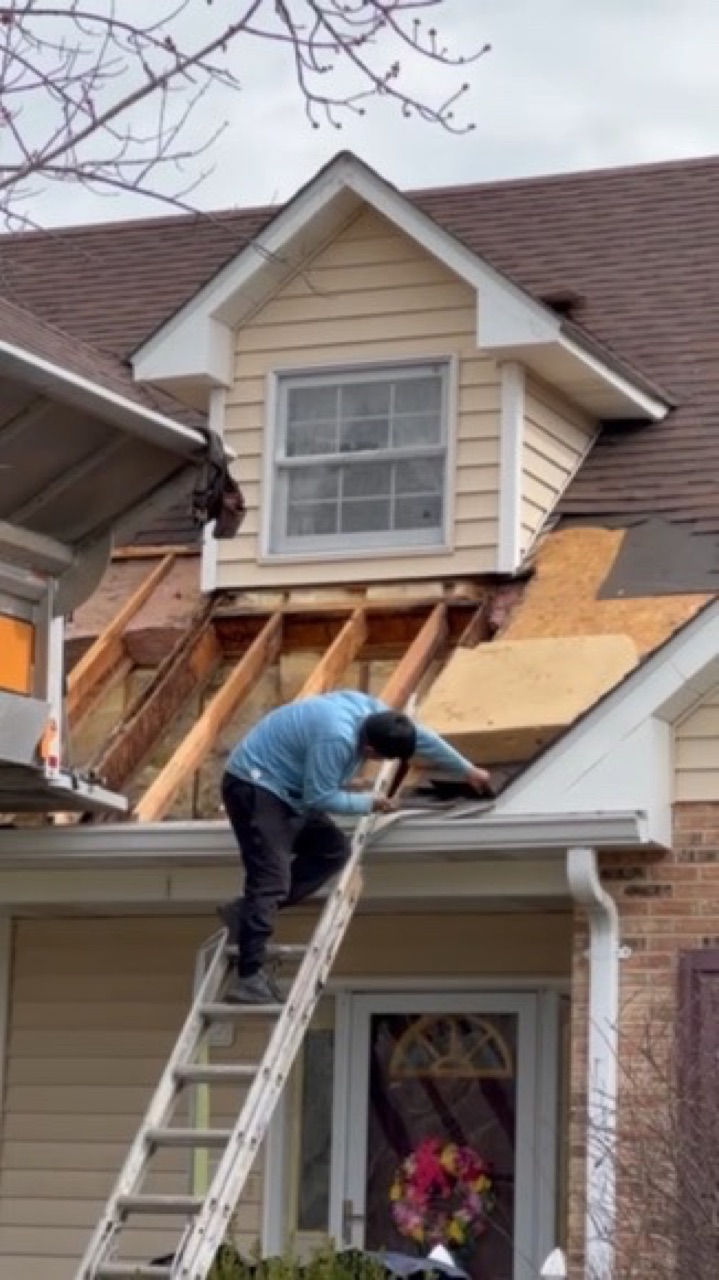
Tim Emmendorfer runs roofing and siding, and gutters sit right between the two. The gutter hangs off the fascia and tucks under the drip edge of the roof, so it only works if the fascia behind it is sound and the roof edge is flashed right. Emmendorfer replaces failed fascia instead of hanging a new gutter on rotten wood, and ties the gutters into the new roof so the eave, the drip edge, the gutter, and the downspout all shed water as one edge. That is the difference between a gutter that lasts and one that pulls loose the first hard freeze-thaw winter.
Why form the gutters on site instead of buying sections?
Emmendorfer runs the aluminum coil through a forming machine at your house and feeds out one continuous gutter the full length of the run. A sectional gutter from a store comes in 10-foot pieces that get joined every 10 feet, and every joint is a future leak. A seamless run on a 40-foot Union eave has zero joints in the middle, only the sealed corners and the outlet, so there is far less to fail over a Missouri winter.
How do you size the downspouts for Missouri storm water?
Emmendorfer sizes the gutter profile and the downspouts to the roof area and pitch feeding them, not to a single default size for the whole house. A big steep roof plane over a Washington two-story sheds far more water in a hail-driven downpour than a small porch roof, so it gets a larger gutter or an extra downspout. The goal is simple: the water that hits the roof leaves the ground away from the foundation, not over the front edge.
Do you tie the new gutters into the roof and fascia?
Yes. Gutters get installed as part of the roof edge, not as a separate afterthought. The gutter tucks under the drip edge so water coming off the shingles drops into the gutter and not behind it. Emmendorfer checks the fascia the gutter hangs on, replaces any board that has softened or rotted, and sets the hangers into solid wood so the run holds through wind and the weight of a freeze-thaw ice load.
What do you do about rotted fascia behind the old gutters?
Emmendorfer pulls the old gutter and looks at the fascia and the roof edge behind it before hanging anything new. Years of an overflowing or back-pitched gutter soak the fascia and the decking underneath, and on Franklin County homes that wood is often soft by the time the gutter comes down. The family replaces the failed fascia instead of screwing a new gutter into rot, the same standard Matt set on the roofing side.
Can you handle gutters as part of a full roof replacement?
Yes, and that is the cleanest way to do it. When Emmendorfer replaces the roof, the drip edge, flashing, and fascia are already open and being worked, so setting the new seamless gutters at the same time means the whole eave goes back together as one system. One in-house family crew does the roof and the gutters across Union, Pacific, and the rest of Franklin County, so there is no second contractor to coordinate or blame.
How the seamless gutters process works
Step 1
Walk the eaves and measure
Emmendorfer walks the roofline, measures every gutter run, and looks at the fascia and roof edge behind the old gutters. The family checks where water has been overflowing or pooling and notes the roof area feeding each run, so the new gutters and downspouts are sized to the real roof, not a guess. You get the price before any work starts.
Step 2
Pull the old gutters and check the fascia
The old sectional or rusted gutters come down first, which exposes the fascia and the roof edge they were hanging on. Years of overflow on a Franklin County home soften that wood, so Emmendorfer inspects it now and flags any fascia that needs replacing before a new gutter goes up. Hanging a new gutter on rotted fascia is how it pulls loose, so this step is not skipped.
Step 3
Replace failed fascia and set the edge
Any soft or rotted fascia gets replaced with sound board, and the drip edge and flashing at the roof eave get set right so water off the shingles drops into the gutter line. On a roof replacement this happens with the new roof. The edge has to be solid and flashed before the gutter hangs, or the gutter just hides the problem it is supposed to solve.
Step 4
Form and hang the seamless run
Emmendorfer forms the aluminum on site to the exact length of each run and hangs it as one continuous piece, tucked under the drip edge with hangers set into the solid fascia. The corners are mitered and sealed, downspout outlets are cut where the water needs to leave, and the gutter is pitched so it drains to the downspouts instead of holding standing water.
Step 5
Set the downspouts and check the flow
The downspouts get sized and placed to carry the storm water from each run down and away from the foundation. Emmendorfer runs water through the system or waits for the next Franklin County rain to confirm every run drains clean with no overflow at the corners. The whole edge, roof to ground, is checked as one system before the crew calls it done.
Frequently asked questions
What are seamless gutters and why are they better than sectional?
Seamless gutters are formed on site as one continuous piece the full length of your roofline, so a 40-foot run has zero joints in the middle. Sectional gutters come in 10-foot pieces joined every 10 feet, and every joint is where Missouri gutters rust and start leaking. Removing the seams removes the most common failure point.
What material does Emmendorfer use for gutters?
Emmendorfer forms gutters from aluminum coil on site. Aluminum will not rust, holds up to Franklin County freeze-thaw winters and humid summers, and forms cleanly into one continuous seamless run. It carries the weight of a Missouri ice load without the corrosion that ends a steel gutter's life early.
How are downspouts sized for Missouri storms?
Emmendorfer sizes downspouts to the roof area and pitch feeding each run, not to one default size for the whole house. A large steep roof plane over a Washington two-story sheds far more water in a hail-driven downpour than a small porch roof, so it gets a larger gutter or an extra downspout to keep storm water from backing up and pouring over the edge.
Should I replace my gutters when I replace my roof?
Yes, replacing both at once is the cleanest approach. When Emmendorfer replaces the roof, the drip edge, flashing, and fascia are already open and being worked, so setting new seamless gutters at the same time ties the whole eave together as one system. One in-house family crew does both, so there is no second contractor to coordinate.
What if the fascia behind my gutters is rotted?
Emmendorfer replaces failed fascia instead of hanging a new gutter on rotted wood. Years of an overflowing or back-pitched gutter soak the fascia, and on Franklin County homes that board is often soft by the time the old gutter comes down. The family sets the new gutter into sound fascia, the same replace-don't-cover standard Matt uses on the roof.
Why do gutters matter for my roof and foundation?
Gutters carry storm water off the roof edge and away from the house. A gutter that overflows or pulls loose dumps water down the fascia and the siding and pools it at the foundation, which is exactly the freeze-thaw cycle that rots wood and cracks the slab. Sized and pitched right, the gutter sends Missouri storm water to the ground away from the home.
Does Emmendorfer install gutters across all of Franklin County?
Yes. Emmendorfer's in-house family crews form and hang seamless gutters across Union, Washington, Pacific, St. Clair, Sullivan, Villa Ridge, and New Haven, throughout Franklin County, Missouri. The same family that has roofed and sided more than 2,400 Missouri homes since 1990 forms the gutters on site at your house, never subcontracted.