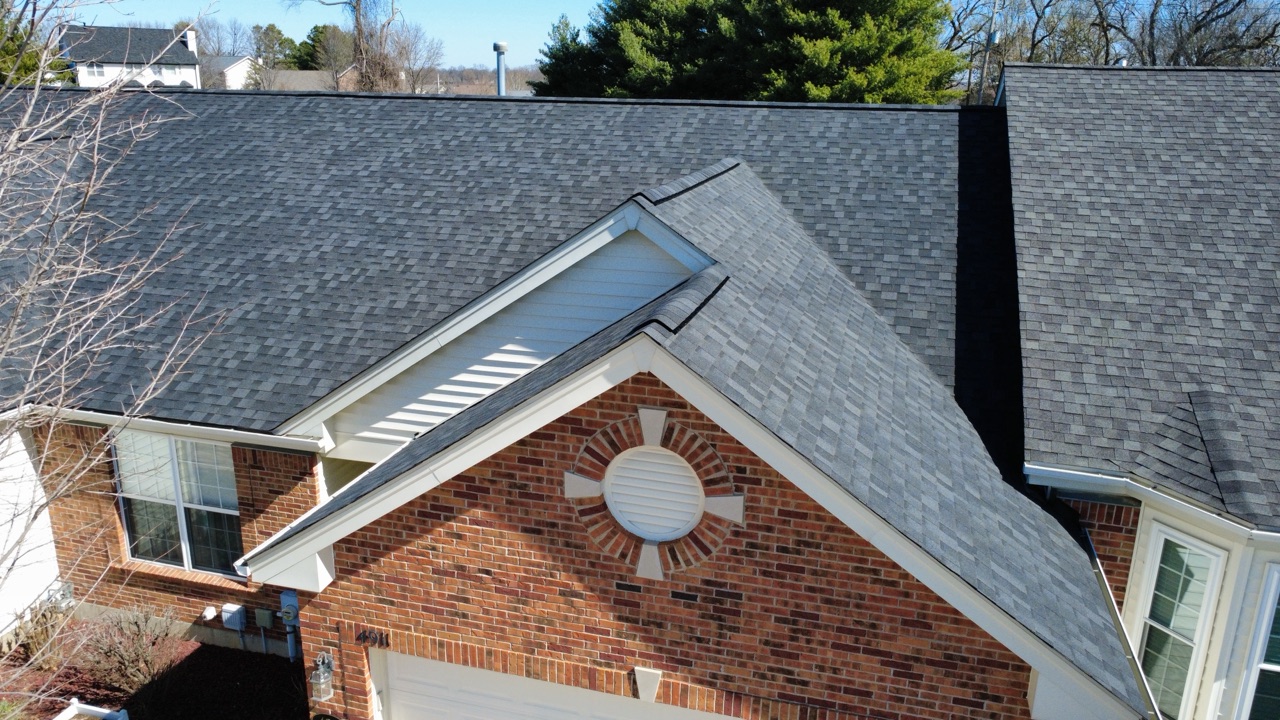
Low-Slope and Torch-Down Roofing in Franklin County: what we actually do
TriBuilt is what goes on a roof too flat for shingles. A standard asphalt shingle needs pitch to shed water, and the porch off the back of a Union ranch, the addition on a Washington home, or the low section over a Pacific kitchen often sits at a pitch where shingles leak no matter how well they are nailed. Emmendorfer installs TriBuilt low-slope and torch-down membrane on those sections so water runs off a continuous sealed surface instead of working under shingle tabs. Matt Emmendorfer set this standard in 1990 and the family still holds it.
Standing water is the thing that kills a flat roof in Franklin County, and freeze-thaw makes it worse. Water that does not drain sits on the membrane, freezes through a Missouri winter, expands, and forces open any seam that was not sealed right. Tom and Tim Emmendorfer walk the low-slope section before quoting, check where the water actually pools, and build the membrane to drain instead of pond. That is the difference between a porch roof that lasts and one that soaks the decking and fascia underneath within a few seasons.
2,400-plus Missouri homes carry Emmendorfer roofing and siding since 1990, and a real share of them have a low-slope or torch-down section the shingle crews skip or botch. The family runs in-house crews and never subcontracts, so the same Emmendorfers who quote the porch install the porch. On a torch-down or low-slope job the membrane is heat-welded and sealed at every seam and flashing, which is exact work, and exact work is why it stays in the family instead of going to a rotating sub who is gone by the next storm.
Why does a low-slope roof need TriBuilt instead of shingles?
Shingles need pitch to shed water. On a porch, an addition, or a flat section below roughly a 2:12 pitch, water moves too slowly to clear shingle tabs and works underneath them. TriBuilt low-slope membrane is a continuous sealed surface with no tabs for water to creep under, so it holds on the flat sections of Union and Washington homes where shingles fail.
What is torch-down and where does it go?
Torch-down is modified-bitumen membrane heat-welded to the roof so the seams fuse into one waterproof skin. Emmendorfer uses TriBuilt torch-down on porch roofs, additions, and low-pitch sections that need a tougher membrane than a simple flat coating. The heat seals every overlap and flashing, which is why it holds against the freeze-thaw and standing water that open up cheaper systems.
Do you check the decking before you put the membrane on?
Yes. Low-slope sections sit under standing water longer than a pitched roof, so the decking and fascia under them rot first. Emmendorfer pulls the old membrane, checks the wood underneath, and replaces any failed decking and fascia instead of laying new membrane over soft sheathing. Covering rotted wood is how a flat roof leaks again in two years, so the family does not do it.
Will you name the manufacturer on the estimate?
Every low-slope and torch-down estimate names TriBuilt in writing, not a generic flat coating. You see the system going on your porch or addition before you approve it. Emmendorfer walks the section first, measures it, and quotes off what the roof actually needs, so the price you approve is the price you pay with no surprise add-ons once the crew is up there.
Can you do the low-slope section and the shingle roof together?
Yes, and most jobs need both. A Franklin County home often has a shingled main roof and a low-slope porch or addition where the two pitches meet. Emmendorfer ties the TriBuilt membrane into the shingle field and flashes the transition so the joint between flat and pitched stays sealed. One in-house family crew handles both, so there is no second contractor pointing at the other when a leak shows up.
How the low-slope and torch-down roofing process works
Step 1
Walk the low-slope section
Tom or Tim Emmendorfer gets on the porch, addition, or flat section and checks where water pools, where the old membrane failed, and how the flat ties into the shingled roof. Nothing is quoted from the ground. Walking the section first is how the price you approve becomes the price you pay.
Step 2
Name TriBuilt on the written estimate
The estimate names the TriBuilt low-slope or torch-down system in writing, with the scope of the section, the decking work expected, and the flashing at every transition. You approve a real system on paper, not a vague flat coating, before any crew shows up to the Union or Washington job.
Step 3
Strip the old membrane and check the wood
The crew pulls the failed membrane down to the deck and checks the sheathing and fascia underneath. Low-slope sections rot first because water sits on them, so any soft decking or fascia gets replaced here, before the new membrane goes on. Bad wood under a flat roof is never covered.
Step 4
Install and heat-weld the TriBuilt membrane
The TriBuilt membrane goes down and, on a torch-down job, every seam and overlap is heat-welded into one continuous surface. Flashings at walls, the shingle transition, and any penetration are sealed. The membrane is built to drain toward the roof's low edge so water clears instead of ponding through a Missouri freeze-thaw.
Step 5
Check the drainage and clean up
Before the crew leaves, they confirm the section drains where it should and that the seams and flashings are sealed tight. The job site gets cleaned, and the work carries an Emmendorfer workmanship warranty. The same family that quoted the porch stands behind it next storm season, because they are still in Union.
Frequently asked questions
What pitch of roof needs a low-slope system instead of shingles?
Roughly 2:12 and flatter is where shingles stop draining reliably and a low-slope membrane takes over. TriBuilt low-slope and torch-down systems go on porches, additions, and flat sections across Union, Washington, and Pacific where the pitch is too low for asphalt shingles to shed Franklin County rain and snowmelt.
What is the difference between torch-down and a flat roof coating?
Torch-down is modified-bitumen membrane heat-welded so the seams fuse into one waterproof skin, which is tougher than a brushed-on coating that sits on top of an old surface. Emmendorfer installs TriBuilt torch-down on porch and addition roofs that need a sealed, fused membrane to hold against standing water and freeze-thaw.
Why does my porch or addition roof keep leaking?
9 times out of 10 it is shingles on a pitch too flat for them, or an old flat coating with failed seams. Water creeps under shingle tabs or through open seams, sits because the section does not drain, and soaks the decking. Emmendorfer replaces the wrong system with TriBuilt membrane built to drain.
Will you replace the rotted wood under my flat roof?
Yes. Low-slope sections sit under standing water longer than a pitched roof, so the decking and fascia under them fail first. Emmendorfer strips the old membrane, checks the wood, and replaces any failed decking and fascia before the new TriBuilt membrane goes on, instead of covering soft sheathing.
Does standing water really damage a flat roof in Missouri?
Yes, and freeze-thaw is why. Water that does not drain sits on the membrane, freezes through a Franklin County winter, expands, and forces seams open. Emmendorfer builds the TriBuilt section to drain toward the low edge so water clears instead of ponding, which is the single biggest cause of low-slope failure here.
Can hail or storm damage be covered by insurance on a low-slope roof?
Yes, low-slope and torch-down sections take hail and wind damage the same as a shingle roof, and Tom Emmendorfer runs the insurance claim and walks the adjuster through it start to finish. The family documents the damage on the flat section and names TriBuilt on the scope so the claim matches the real repair.
Who installs my low-slope roof, the family or a subcontractor?
The Emmendorfer family installs it. In-house family crews, never subcontracted, since 1990. Torch-down and low-slope membrane is exact, heat-welded work, so it stays with the same family that quoted it. The same crew that walks your Union or Washington porch is the one that seals it, and they are still in Franklin County next season.